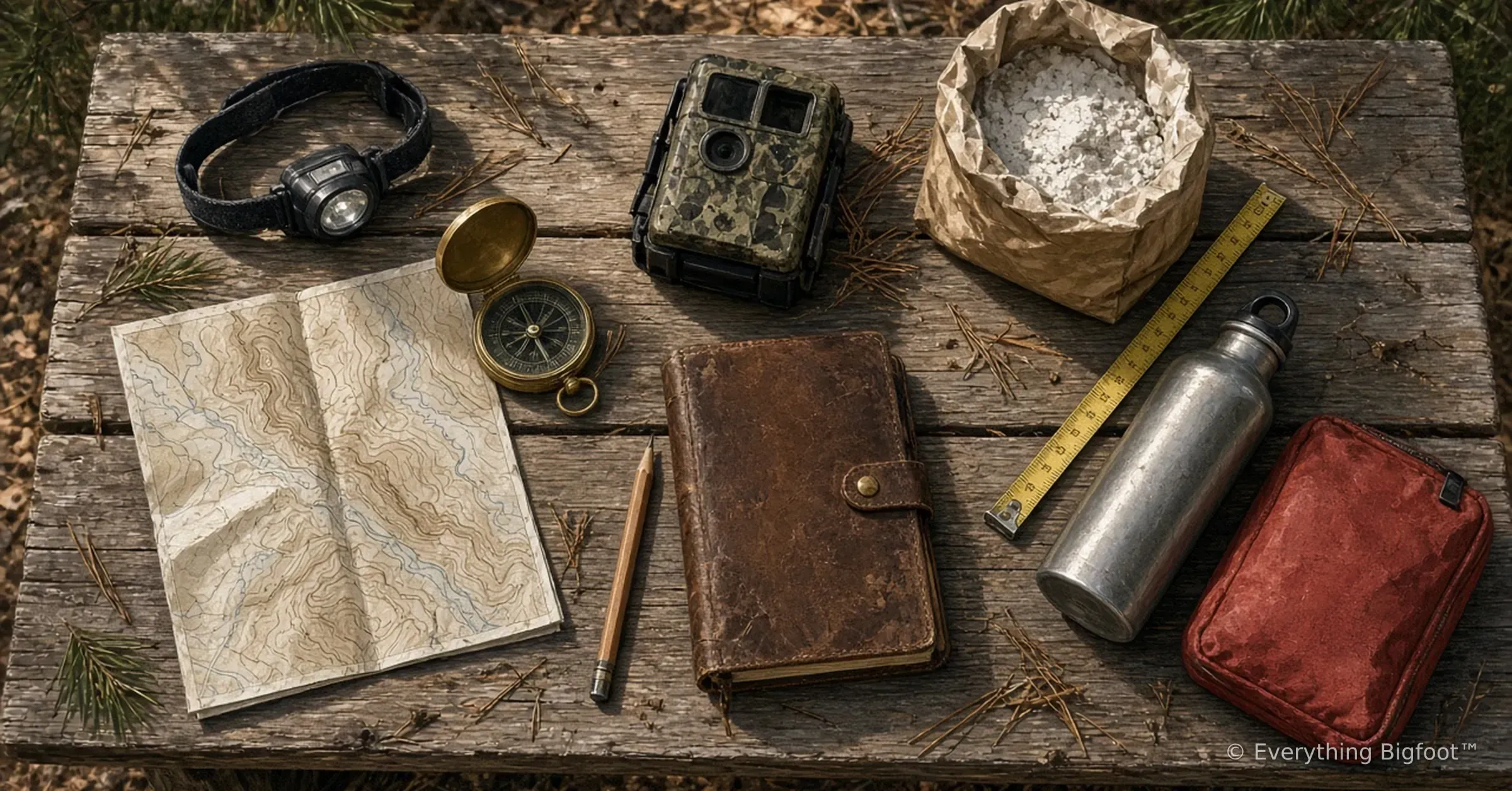
So you want to go looking for Bigfoot. Welcome to the club! "Squatching," the popular word for heading into the woods to look and listen for Sasquatch, is really a mix of hiking, wildlife watching, night camping and detective work.
The good news is you don't need expensive gadgets to start. The most important gear is the stuff that gets you home safe. Here's our beginner's checklist, in order of priority.
Part 1: Safety first, the Ten Essentials
The National Park Service recommends that every hiker carry the Ten Essentials, a system originally developed by The Mountaineers and published in their classic book Mountaineering: The Freedom of the Hills. Hiking and scouting organizations across North America teach the same list. The items are organized as ten "systems" that help you handle minor injuries, sudden weather changes or unexpected emergencies. They matter even more when you're out at dusk or after dark, which is when many squatchers like to be out.
- Navigation: a map, a compass and/or GPS. The NPS advises knowing how to use them before you go and bringing a physical map as a backup. Pack an extra battery for your phone, because signal and battery both disappear in the backcountry.
- Illumination: a headlamp plus extra batteries. The NPS recommends headlamps over flashlights because they're hands-free, which matters when you're also holding a camera or recorder. A red-light mode helps preserve your night vision.
- Sun protection: sunglasses, sunscreen, a hat.
- First aid kit.
- Repair kit and tools: duct tape, a knife or multi-tool, and scissors. The NPS also suggests a trowel and toilet paper.
- Fire: waterproof matches or a lighter, plus fire starters. Fire is both an emergency signal and a heat source. Check local fire regulations before you go.
- Emergency shelter: a tent, tarp, bivy sack or space blanket.
- Nutrition: an extra day's supply of no-cook food, such as trail mix, nuts or granola bars.
- Hydration: extra water, plus a way to treat water you find. Drink before you feel thirsty.
- Extra clothing: a jacket, hat, gloves and rain shell, packed for the most extreme conditions you could meet. Nights get cold fast, even in summer. The NPS adds that bright clothing makes you easier for search and rescue to spot, so keep something bright in your pack even if you're wearing earth tones.
Always tell someone where you're going and when you'll be back. In our reporting guide we mention the two Portland men found dead in Washington's Gifford Pinchot National Forest in December 2024. The Skamania County sheriff cited exposure and lack of preparation. No sighting is worth that risk.
Part 2: Documenting what you find
If something strange happens, the goal is to record it clearly and honestly.
- Phone or camera: this is your most-used tool. Practice shooting video in low light before you go.
- Trail cameras: motion-activated cameras let you watch an area for days or weeks. Only place them where you have permission, and follow the land manager's rules.
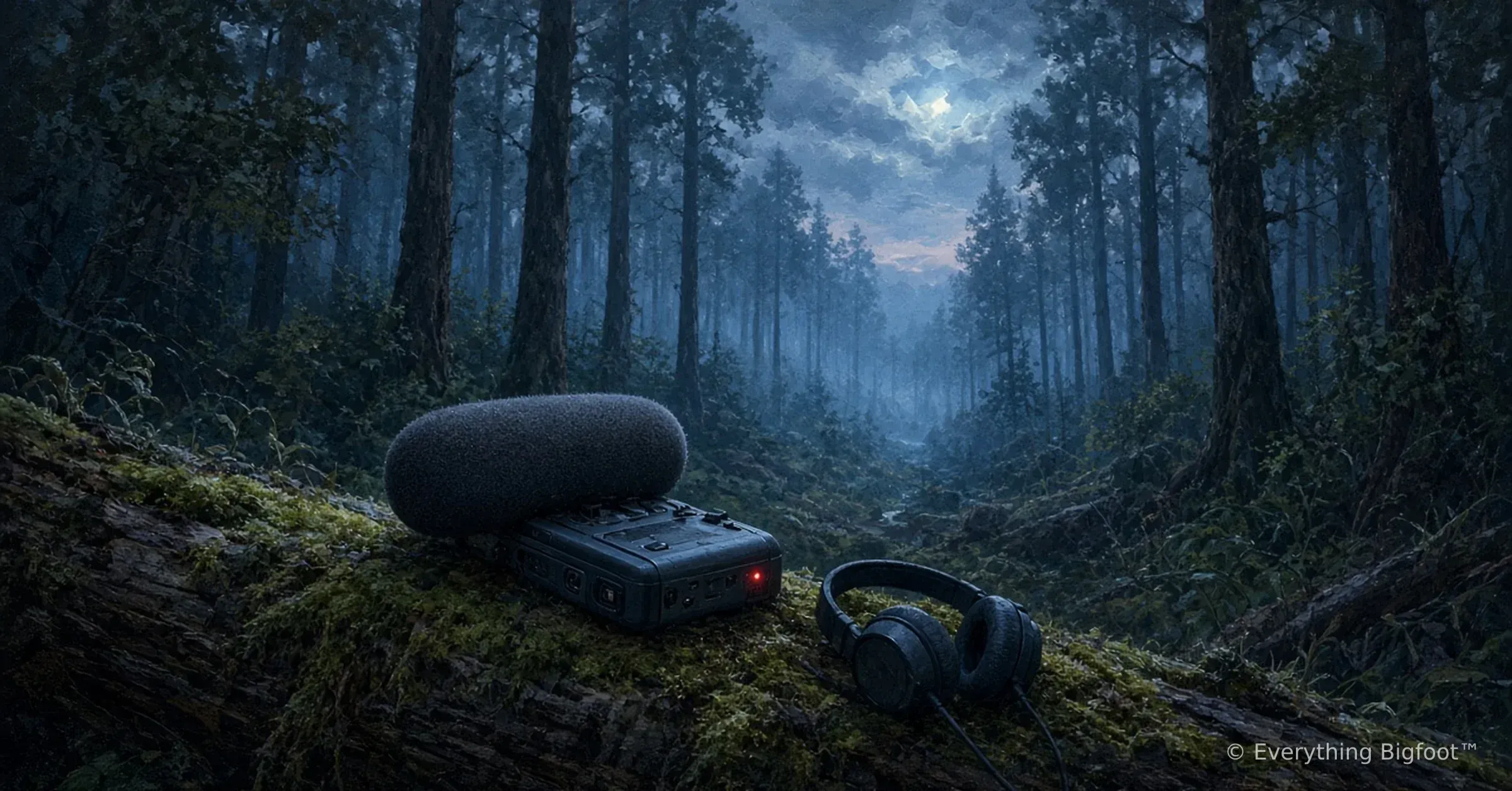
- Audio recorder: many reported encounters involve sounds like whoops, knocks or howls. A small digital recorder (or a phone app) with a windscreen helps. Note the time of every sound.
- Binoculars: great for scanning ridgelines and clearings in daylight.
- Thermal or night-vision optics (optional): popular with experienced squatchers, but they're pricey. Borrow or rent before you buy.
Part 3: Track and evidence kit
- Measuring tape and a ruler or scale bar to put next to any print in photos
- Plaster of Paris or dental stone, a mixing bag and water for casting footprints
- Ziplock bags and a marker for labeling anything you collect, like hair or scat (use gloves)
- Flagging tape to mark a spot temporarily. Remove it when you leave!
- Field notebook and pencil: write the date, time, weather, GPS location and exactly what you saw or heard, as soon as possible. Memories change fast.
- Note the viewing conditions: distance, lighting and how long you watched. The BFRO sorts reports into classes by how likely a misidentification is. Clear, close views where that can be ruled out are Class A. Distant or poor-light views, and every sound-only report, are Class B. Your notes on the conditions are what an investigator will ask about.
Casting tip: photograph the print first, from straight above, with the scale bar beside it. Then cast. A cast without a good photo is much less useful.
Part 4: Comfort and stealth
- Quiet clothing: fleece and soft fabrics, not crinkly nylon
- Earth-tone colors (but wear blaze orange during hunting seasons; safety beats stealth)
- Sit pad or camp chair for long listening sessions
- Bug spray
- Snacks that don't crinkle, plus a way to pack out every wrapper
Part 5: Squatching etiquette
These rules keep you safe, keep landowners friendly and keep the hobby respectable.
- Get permission. Never trespass on private land, and follow all park and forest rules.
- Leave No Trace. Pack out everything, stay on durable surfaces and don't disturb wildlife (see the seven principles below). Bigfoot or no Bigfoot, the forest is home to a lot of animals. It's a good one to practice with kids on a short walk.
- No weapons-first mindset. Several counties have passed laws or resolutions against harming a Sasquatch. More importantly, firearms plus darkness plus excitement is a dangerous combination.
- Don't bait or leave food. It attracts bears and other wildlife, and it may be illegal where you are.
- Be honest. Never fake evidence. Hoaxes have hurt Bigfoot research for decades.
The seven Leave No Trace principles
Leave No Trace calls its seven principles the foundation of everything it teaches. Here they are with a squatcher's spin:
- Plan ahead and prepare. Check weather, regulations and trail conditions. That includes hunting seasons and fire bans.
- Travel and camp on durable surfaces. Stick to trails and durable ground. Bushwhacking after every snapped twig damages the very habitat you came to explore.
- Dispose of waste properly. Pack it in, pack it out, including food scraps.
- Leave what you find. Take photos, not souvenirs. That goes double for rocks, plants and artifacts, and for "tree structures" you think might be significant.
- Minimize campfire impacts. Use a stove when you can, and keep fires small, contained and legal.
- Respect wildlife. Watch from a distance and never feed wild animals.
- Be considerate of others. Keep noise down. Late-night wood knocks and call blasting near a busy campground won't win the hobby any friends.
When to go: what the reports say
The public BFRO dataset behind our sightings map has 4,045 dated reports. Here's how they fall across the calendar:
- Summer (1,369) and fall (1,354) are nearly tied as the busiest seasons. Spring (689) and winter (633) each have about half as many.
- October is the single busiest month with 545 reports, followed by July (505), August (475) and September (409).
- February is the quietest month with just 162.
That pattern likely says as much about people as about Bigfoot. Reports pile up when hikers, campers and hunters are in the woods. But it's useful for planning: fall offers cooler nights, fewer bugs and the busiest month on record, as long as you respect hunting seasons and wear blaze orange where required.
Part 6: When you get home
- Back up your photos, video and audio right away. Keep the originals unedited.
- Write a full account while it's fresh.
- If you think you had an encounter, consider submitting it to the BFRO's report form. The BFRO says it investigates modern reports before publishing them, which can mean a phone interview or a field visit, so include contact details you'll actually answer. If an investigator can't reach the witness, the report isn't treated as credible. Our step-by-step guide shows you how.
Where should beginners go?
Start somewhere with good trails, good maps and good cell coverage near the trailhead: a state park or national forest campground in an area with a history of reports. Our sightings map lets you explore public reports by county. And joining a Bigfoot festival or a group outing is a great way to learn from experienced squatchers; see our research organizations guide.
Pack smart, stay safe, and have fun out there. The woods are amazing whether or not anybody big and hairy shows up.