It lasts about a minute. It's shaky, grainy and shot from a distance. And for nearly six decades it has been the most famous, most studied and most argued-about piece of Bigfoot evidence in the world.
On October 20, 1967, Roger Patterson and Bob Gimlin said they filmed a large, hairy, upright figure walking along Bluff Creek in northern California. Believers call the figure "Patty." Skeptics call it a man in a suit. In 2026, a new documentary, Capturing Bigfoot, reopened the debate all over again.
This is the full story: what the two men said happened, what scientists and special-effects experts have said about it, the hoax claims, and why the film still matters. We've relied on the detailed Wikipedia article on the film, which cites the major books on both sides.
The men behind the camera
Roger Patterson (1933–1972) was a former rodeo rider and amateur boxer from the Yakima, Washington, area. According to Wikipedia, he became interested in Bigfoot after reading an article by naturalist Ivan T. Sanderson in True magazine in December 1959. He was further inspired by Sanderson's 1961 book Abominable Snowmen: Legend Come to Life.
Patterson went all in. He visited Bluff Creek in 1962, saw fresh tracks at Laird Meadow a year or two later, and in 1966 self-published a book called Do Abominable Snowmen of America Really Exist? By 1967, he was working on a Bigfoot documentary with friends acting as cowboys and trackers.
Bob Gimlin (born 1931) was Patterson's friend. Wikipedia says that Gimlin doubted Bigfoot existed, but agreed to Patterson's insistence that they should not try to shoot one.
Why Bluff Creek?
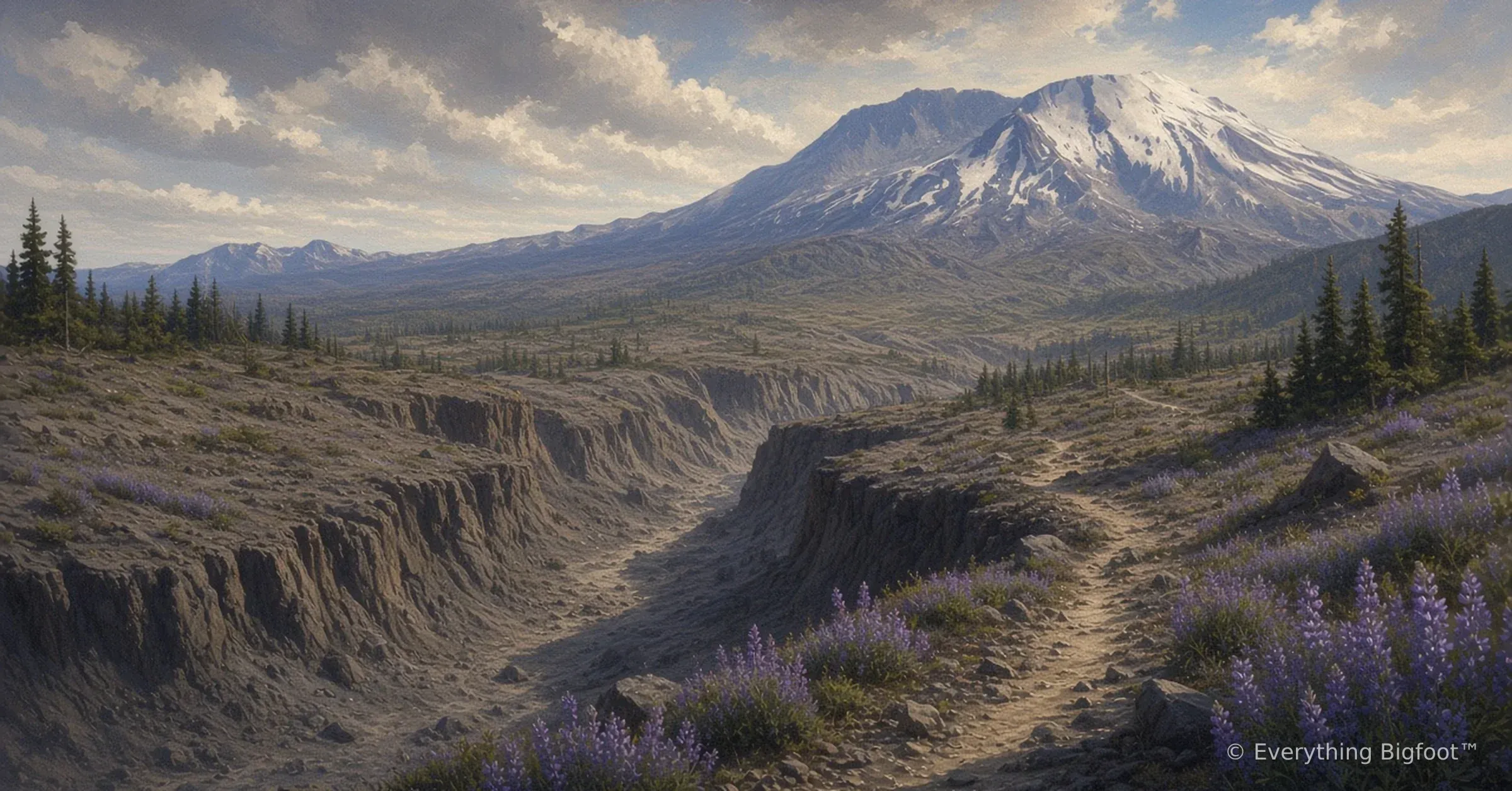
In October 1967, the two men drove Gimlin's truck, loaded with three horses, to the Six Rivers National Forest in far northern California. Patterson picked the area because of past reports and huge footprints found there since 1958. The most recent find was at nearby Blue Creek Mountain in late August 1967, where journalist John Green, researcher René Dahinden and archaeologist Don Abbott investigated tracks. Bluff Creek is also where the modern name "Bigfoot" took off in 1958. Our post on where the name Bigfoot came from tells that story.
October 20, 1967: the encounter
Here's the story as Patterson and Gimlin told it, according to Wikipedia's account.
In the early afternoon, between about 1:15 and 1:40 p.m., the two men were riding upstream along the east bank of Bluff Creek. They came around a large overturned tree at a bend in the creek and saw a figure beside a logjam left over from the 1964 flood.
Patterson's horse reared. He said he spent about 20 seconds getting free of the saddle, controlling his horse and pulling his rented 16 mm camera out of a saddlebag. Then he ran toward the figure, filming as he went.
The first part of the film is very shaky. Then the figure turns its head and upper body and looks back over its right shoulder at the men. This moment includes frame 352, one of the most famous images in the history of cryptozoology. Patterson later told John Green that the expression felt like "contempt and disgust ... you know how it is when the umpire tells you 'one more word and you're out of the game.'"
The figure walked into the trees and disappeared as the reel ran out. Gimlin followed on horseback for a short distance before Patterson called him back. According to Wikipedia, the entire encounter lasted less than two minutes.
Afterward, the men filmed the tracks on a second roll and made plaster casts of the best right and left footprints.
What the film shows
Wikipedia describes the subject as "a large, hairy, bipedal, apelike figure" with hair covering most of its body, including prominent breasts. That's why fans call it a female and nicknamed it "Patty." The film has 954 frames. It runs about 59.5 seconds at 16 frames per second, or about 53 seconds at 18 frames per second, the speed that anthropologist Grover Krantz believed was correct.
The aftermath
That same evening, around 6:30 p.m., Patterson and Gimlin reached Al Hodgson's store in Willow Creek. Patterson shipped the film to his brother-in-law in Yakima, and he asked Hodgson to call archaeologist Don Abbott to bring a tracking dog. Abbott declined. Krantz later argued that this phone call on the day of the encounter was evidence against a hoax, at least on Patterson's part.
The film soon made national news. Patterson showed clips on popular TV talk shows, including Johnny Carson's Tonight Show. The footage appeared in magazines such as Argosy and Reader's Digest. A few days after the encounter, U.S. Forest Service employee Lyle Laverty visited the site and photographed the tracks. Taxidermist Bob Titmus later made plaster casts of 10 successive prints.
Roger Patterson died of Hodgkin's lymphoma in 1972. According to sources cited by Wikipedia, he "maintained right to the end that the creature on the film was real." Gimlin stayed out of the spotlight for decades, and Wikipedia says he has always denied being part of any hoax. Since about 2005, he has spoken at Bigfoot conferences.
What the experts said
The film has drawn relatively little interest from mainstream scientists. Those who have studied it disagree.
Voices that took it seriously
- Grover Krantz, the Washington State University anthropologist, argued that Patterson had "nowhere near the knowledge or facilities" to fake the anatomy in the film, "nor for that matter, did anyone else."
- Universal Studios technicians reportedly said that faking it would require "a completely new system of artificial muscles" and an actor trained to walk that way.
- Janos Prohaska, a costume designer and ape-suit performer, said, "to me it looks very, very real."
- Bill Munns, a makeup and effects artist, spent years analyzing the film. In his 2014 book When Roger Met Patty, he argues that it shows a non-human animal. He co-wrote papers on its anatomy with Jeff Meldrum.
- Jeff Meldrum, an anthropologist at Idaho State University, has defended the film for years.
- A MonsterQuest episode tried to get a performer wearing motion-tracking lights to copy the walk. The show reported that the attempt failed and called the findings "intriguing but inconclusive, until a body is found."
Voices that doubted it
- John Napier, the British primatologist, said he was convinced Sasquatch existed but doubted the film. He wrote, "I could not see the zipper; and I still can't," before adding that it might be a "brilliantly executed hoax."
- Bernard Heuvelmans, often called the father of cryptozoology, thought the figure was a man in a suit.
- David Daegling and Daniel Schmitt, two anthropologists, concluded that "it is not possible to evaluate the identity of the film subject with any confidence," and argued that a human could reproduce the walk.
- Stan Winston, the special-effects legend, called it "a guy in a bad hair suit."
The Stanford gait researchers Jessica Rose and James Gamble also tried to replicate the walk with Meldrum for a Discovery Channel show. Rose called the match "a slam dunk," Gamble was less sure, and Meldrum said only "some aspects" had been replicated.
The hoax claims
Over the years, several people have claimed the film was faked.
Even Gimlin once allowed for doubt. In a 1999 phone interview for the BBC, he said he had been "totally convinced no one could fool me," but that "there could have been the possibility" of a hoax, adding, "it would have to be really well planned by Roger."
- Philip Morris, owner of a North Carolina costume company, said in 2002 that he sold Patterson a gorilla suit by mail order in 1967. Wikipedia notes he offered no evidence apart from his own testimony.
- Bob Heironimus, a Yakima man who knew Patterson, has long said he was the person in the suit. Greg Long's 2004 book The Making of Bigfoot presents his account along with statements from relatives and friends. Film defenders point out that Heironimus's description of the suit doesn't match Morris's, and they argue that his arms and height don't fit the figure.
- Ray Wallace's family said after his death in 2002 that he had faked footprints at Bluff Creek in 1958, and some writers linked him to the film. Loren Coleman and Jeff Meldrum both argued that Wallace had nothing to do with the 1967 footage.
Film defenders reply that no one has ever produced the suit, and no one has convincingly recreated the film. Bigfoot researcher Daniel Perez wrote, "It has never been convincingly replicated. To any thinking person, that should speak volumes." Skeptics counter that no one has seriously tried to recreate it with period-accurate equipment and a professionally built suit.
2026: *Capturing Bigfoot*
The biggest Patterson–Gimlin news in years came this year. The documentary Capturing Bigfoot, directed by Marq Evans, premiered at South by Southwest in March 2026. It was released on Amazon Prime Video yesterday, October 20, 2026, the film's 59th anniversary.
According to Wikipedia:
- In June 2022, Olympic College film instructor Teresa Brooks brought Evans a 16 mm reel she'd found in her late father's locked safe. Her father, Norm Johnson, had worked in a Boeing film lab and was connected to Patterson and Gimlin.
- The reel contains a 40-second clip reported to have been made in 1966. The documentary presents it as a "dress rehearsal" showing a Bigfoot figure walking in a similar wooded setting.
- Wikipedia says that in the film, Roger Patterson's widow, Patricia, and his son, Clint, say the footage was a hoax. So does Pat DeAtley, the widow of the businessman who funded Patterson's venture.
- Jeff Meldrum appears too. Wikipedia quotes a description of him as someone who "detects real mammalian musculature" in the subject.
Not everyone is convinced. Matt Moneymaker of the Bigfoot Field Researchers Organization questioned the new reel: "Even if they found some reel, how would you know whether what they're showing in the documentary is what's on the reel?" He also said, "The film itself debunks any attempts to debunk it." Evans responded that the documentary does not use AI-generated material. Evans and producer Tamir Ardon also said their film doesn't try to answer whether Bigfoot is real.
Bob Gimlin, now in his 90s, appears in the documentary's cast list. Wikipedia's article does not report him changing his long-held position that he was not part of any hoax.
So, is it real?
Here's where things stand:
- For believers, the film remains the best visual evidence ever recorded. It shows a figure with a fluid walk, believable body proportions and visible muscle movement. No one has produced the suit or a convincing recreation, and Gimlin has stood by his story for nearly 60 years.
- For skeptics, the film's history is full of red flags. Patterson was planning a Bigfoot documentary, several people claim to have been involved, and Capturing Bigfoot adds a reel and family statements that point toward a hoax.
What everyone agrees on is this: no other piece of Bigfoot evidence has been studied so closely by so many people for so long. That's why Bigfoot fans celebrate Sasquatch Awareness Day on its anniversary every October 20.
Go deeper
- Read: Our list of the best Bigfoot books includes Greg Long's The Making of Bigfoot and Jeff Meldrum's Sasquatch: Legend Meets Science, the strongest books on each side.
- Watch: Capturing Bigfoot and more are in our guide to Bigfoot movies and TV shows.
- Explore: Learn more about Bluff Creek and the Six Rivers country in Bigfoot in California, and weigh the evidence in Is Bigfoot real? What science says.
This article summarizes claims and counterclaims reported in the sources listed with this post as of October 2026. We take no position on whether the figure in the film is a Bigfoot.